




It has been over two centuries since tungsten was discovered, yet its significant industrial applications have only been realized in the last century. Today, tungsten's unique properties, particularly its highest melting point among all metals and remarkable hardness, make it indispensable in various high-tech and industrial applications.
 Tungsten, with the element symbol W and atomic number 74, derives its name from the Swedish words "tung sten," meaning "heavy stone." Known also as wolfram, from the mineral wolframite, tungsten is rarely found in a pure form in nature due to its reactivity, typically occurring in compounds with other elements.
1779
Peter Woulfe, an English chemist, was the first to deduce the existence of a new element - tungsten - from the mineral wolframite.

1781
Carl Wilhelm Scheele, a Swedish chemist, discovered tungstic acid from scheelite. Scheele, alongside Torbern Bergman, suggested that a new metal could be obtained by reducing this acid.

1783
Spanish chemists, the Elhuyar brothers, successfully isolated tungsten by reducing tungstic acid with charcoal, marking the official discovery of the element.

Fausto Elhuyar
1755-1833

The early applications of tungsten were limited due to the difficulties associated with its extraction and processing. However, its potential was recognized in the 19th and early 20th centuries, leading to innovations that would eventually unlock its industrial capabilities.
1900s
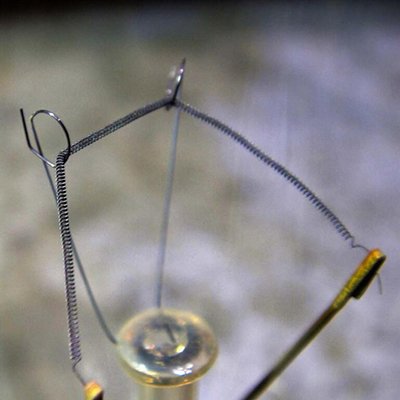
The advent of electric lighting and electronics spurred the first widespread use of tungsten as filaments in light bulbs due to its high melting point and good electrical conductivity.
1900s-1950s
Tungsten found its way into the production of steel alloys, enhancing their strength and resistance to wear and high temperatures, which was crucial for cutting tools and armor-piercing ammunition.
1920s
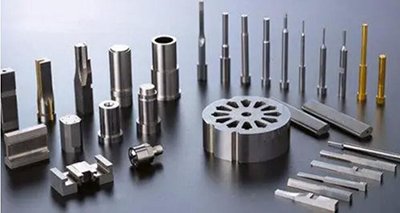
The development of cemented carbides, with tungsten carbide as a key component, revolutionized the machining and metalworking industries, providing materials that were harder than steel and retained their edge even at high temperatures.
Modern Era
Tungsten's applications have expanded into electronics, aerospace, medical devices, and even as catalysts in chemical reactions. Its unparalleled properties have made it a critical material in advancing technology and industrial processes.
Despite initial challenges in processing and application, tungsten has emerged as a material of choice for applications requiring high density, hardness, and resistance to high temperatures. From its early use in incandescent filaments to its role in modern cutting tools and aerospace components, tungsten's journey reflects the evolution of material science and engineering.
Source: Adapted from historical accounts and the International Tungsten Industry Association (ITIA) publications.