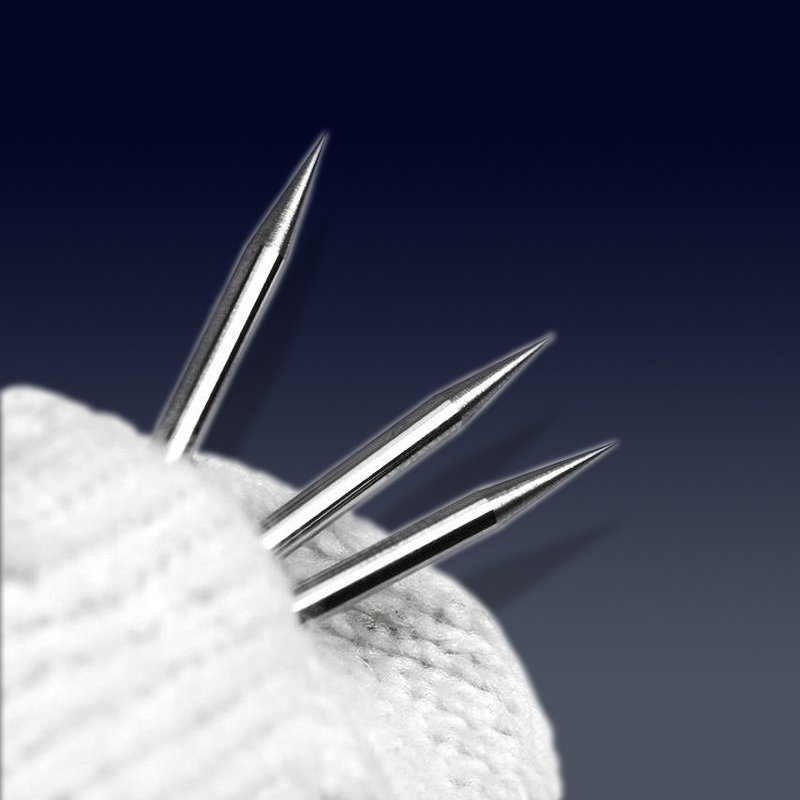
Tungsten, symbolized as W and also known as 'Wolfram', is primarily found in the ores scheelite and wolframite. This greyish-white, lustrous transition metal was discovered by Peter Woulfe in 1779 and first isolated by the de Elhujar brothers in 1783. It stands out for having the highest melting point of all metallic elements, exhibiting high hardness, density, good electrical and thermal conductivity, and a low coefficient of thermal expansion. These properties make tungsten exceptionally valuable in various industries, including aviation, aerospace, electrical engineering, and electronics. While pure tungsten is soft, it becomes incredibly strong when made into compounds. Its durability, slow evaporation rate, and remarkable resistance to corrosion underline its robustness in extreme environments, making it an indispensable material in many high-tech applications.

Tungsten is a metal of extremely high thermal resistance and density. It has:
. High Melting Point: Tungsten melts at 3,422°C, the highest of all metals.
. High Density: Its density is 19.25 g/cm³, similar to gold.
. Strong Tensile Strength: Tungsten is exceptionally strong, resisting deformation and breakage.
. High Hardness: It is very hard, making it resistant to abrasion and wear.
. Low Thermal Expansion: Tungsten expands very little when heated, maintaining its shape.
. Good Conductivity: It conducts electricity well, useful in electronics.
. Chemical Stability: Resistant to most acids and alkalis, tungsten remains stable under a variety of chemical conditions.
. Versatility in Forms: Tungsten can be processed into multiple forms such as wire, powder, and solid, adaptable to various industrial uses.
Tungsten is a silver-white transition metal that rarely exists in its elemental form in nature, typically found as ores like wolframite (WO3) and scheelite (FeWO4/MnWO4). The chemical composition of pure tungsten predominantly consists of the tungsten element, with a W content exceeding 99.9%. The purest forms of tungsten are quite malleable and easy to work with, yet the presence of small amounts of carbon and oxygen imparts considerable hardness and brittleness to the metal. Pure tungsten is commonly used as a heating material in furnaces, welding electrodes, and contact materials.

Potassium-doped tungsten is a special alloy made by adding a small amount of potassium to tungsten, enhancing its high-temperature stability, electron emission capabilities, and non-sagging properties, making it ideal for lighting filaments and electronic components. Tailored for diverse applications, our potassium-doped tungsten comes in various grades suitable for use in fluorescent lamps, energy-saving lamps, halogen lamps, high-color-temperature lamps, automotive lamp filaments, as well as long-life high-luminous-efficiency halogen lamp filaments, HID electrodes, heating elements for vacuum coating, furnace heating materials, supports, lead wires, and printer pins.

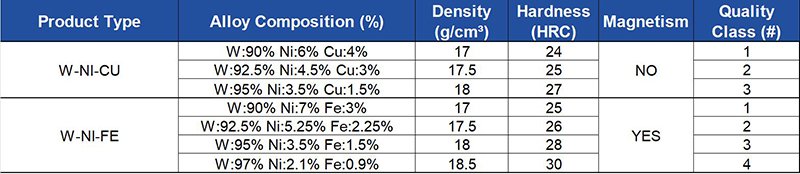
Tungsten Heavy Alloy is a type of tungsten-based metal matrix composite(with a typical tungsten content of 80% to 98%) and a small amount of elements such as Ni, Fe, Cu, Co, Mo, Cr. These alloys have a high density ranging from 15.20 to 18.70 g/cm³ and are also known as heavy alloys or high-density materials. High-density tungsten alloys are primarily divided into two major series: W-Ni-Fe (with weak magnetic properties) and W-Ni-Cu (non-magnetic), with the option of W-Ni-Fe-Cu combinations. Compared to others, W-Ni-Fe alloys possess superior mechanical properties and play a significant role in both defense industries and various sectors of the national economy. They are an important new material in the defense industry and are gradually being extended to various civilian industries.
Tungsten-lanthanum (W-La) alloy refers to an alloy product that incorporates a suitable amount of lanthanum oxide (La2O3) into a tungsten matrix. It possesses excellent thermal, mechanical, and chemical properties, with lanthanum oxide content typically ranging from 0.5% to 2.5%. Lanthanum tungsten electrodes have become the most popular electrode material internationally and are primarily used for direct current welding, although they also perform well in alternating current welding.

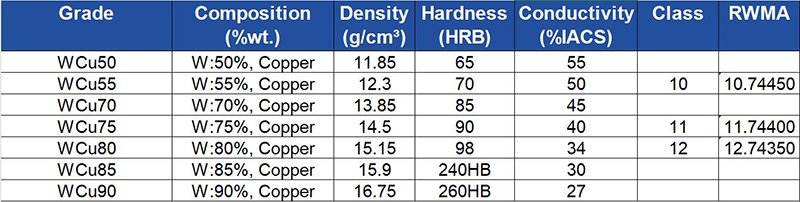
Tungsten copper is an alloy consisting of tungsten and copper, with the copper content varying between 10% to 50%. It possesses the low thermal expansion rate of tungsten and the high thermal conductivity of copper, with the ability to alter the coefficient of thermal expansion based on the materials it accompanies. Tungsten copper materials feature high-temperature resistance, resistance to electric arc erosion, high strength, significant specific gravity, excellent electrical and thermal conductivity, and machinability (capable of forming complex shapes). They exhibit sweating cooling characteristics and are extensively used as materials for vacuum contacts, electrodes, electronic packaging, as well as specialized applications in rockets and missiles, across industries like mechanical engineering, power, electronics, metallurgy, and aerospace.
Tungsten-rhenium alloy is a solid-solution strengthened alloy based on tungsten and composed with rhenium. The commonly used rhenium contents (mass fraction, %) in the alloy are 3, 5, 10, 25, and 26, divided into low-rhenium W-Re alloys (Re≤5%) and high-rhenium W-Re alloys (Re≥15%). The main processed materials of tungsten-rhenium alloy are wire and sheet, with wire making up the majority, primarily used as high-temperature structural materials. Tungsten-rhenium alloys have better mechanical properties and ductility than pure tungsten, and also a higher electrical resistivity, thus offering good machinability and weldability. The tungsten-rhenium alloy with 3% rhenium is used as the core metal for electron tube filaments, grid wires, and directly heated cathodes. Tungsten-rhenium alloys containing thorium, namely thoriated tungsten-rhenium alloy, are used for directly heated cathodes in large emission tubes, exhibiting better performance than thoriated tungsten cathodes and less susceptibility to deformation at high temperatures.

+8615302000357
widitmetals@gmail.com
NO11. Liyu Industrial Park,Tian Yuan,
ZhuZhou,Hunan 412007