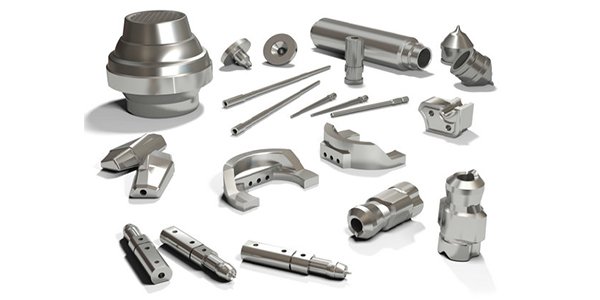

What Is Tungsten Heavy Alloy?
High-density tungsten alloy is a type of material primarily composed of tungsten (with a tungsten content typically between 80% to 98%), and a small addition of elements such as Ni, Fe, Cu, Co, Mo, Cr, etc. These alloys have a density ranging from 15.20 to 18.70g/cm³ and are also known to the world as high-density or heavy alloys. The family of tungsten-based high-density alloys includes tungsten nickel iron alloys, tungsten nickel copper alloys, tungsten molybdenum nickel iron alloys, and tungsten molybdenum alloys.
Tungsten-based high-density alloys Features
●High specific gravity: Generally, the density is 16.5-18.75g/cm³;
●High strength: Tensile strength ranges from 700 to 1000Mpa;
●Strong radiation absorption capacity: 30-40% higher than lead;
●High thermal conductivity: Thermal conductivity of tungsten alloy is five times that of mold steel;
●Low coefficient of thermal expansion: Only half to one-third of that of iron or steel;
●Good electrical conductivity: Its excellent electrical conductivity makes it widely used in the lighting and welding industries.
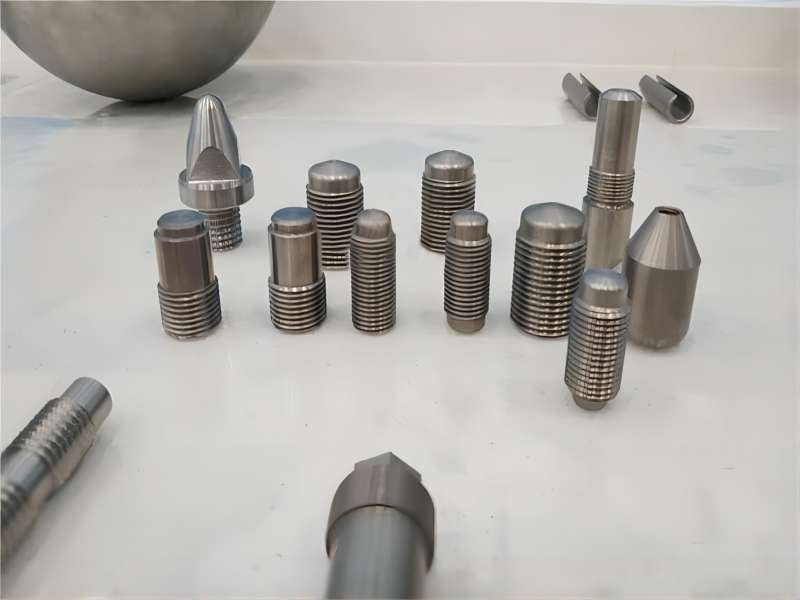
Product Specifications:
●High-density alloy spheres: φ≥ 1.5mm
●Slender rods: (φ≥1mm) × (L≤600mm)
●Sheets: (Thickness≥0.15mm) × (Width≤400mm) × (Length≤600mm)
●Disks, rings, blocks, rods: Maximum size φ550mm
●Production arranged according to customer needs
Tungsten Heavy Alloy Material Properties
| Mil. T-21014 Rev. D | Class 1 | Class 2 | Class 3 | Class 4 |
| SAE-AMS-T-21014 | Class 1 | Class 2 | Class 3 | Class 4 |
| AMS 7725 B | 7725B | — | — | — |
| ASTM-B-777-87 | Class 1 | Class 2 | Class 3 | Class 4 |
| Minimum Density (g/cc) | 16.85 | 17.15 | 17.75 | 18.25 |
| Minimum Density (lbs/in3) | 0.608 | 0.619 | 0.641 | 0.659 |
| Nominal W Content (wt.%) | 90 | 92.5 | 95 | 97 |
| Nominal Nickel Content (wt.%) | 7.1 | 5.4 | 3.6 | 2.1 |
| Nominal Iron Content (wt.%) | 2.9 | 2.1 | 1.4 | 0.9 |
| Maximum Magnetic Perm | n/a | n/a | n/a | n/a |
| Typical Hardness (HRC) | 28 | 28 | 29 | 30 |
| Modulus of Elasticity (x106 psi) | 45 | 48 | 50 | 52 |
| Ultimate Tensile Strength Min. (ksi) | 120 | 120 | 120 | 110 |
| 0.2% Offset Yield Strength Min (ksi) | 80 | 80 | 80 | 80 |
| Minimum % Elongation (1" Gauge Length) | 10 | 8 | 6 | 2 |
Application
▲ Sports Equipment Series Products:
Tungsten Alloy Darts Standard
Tungsten Alloy Fishing Sinkers Series: bullet type, teardrop type, tube type, semi-teardrop type, cylindrical with hole type.
Tungsten Beads and Balls Series: φ1.5mm -φ10mm precision ±0.01mm, used for fishing sinker weights, shrapnel, medical instrument weights, shotgun pellets; φ0.1mm-φ10mm precision ±0.1mm, used for oil drilling balance, shotgun pellets.
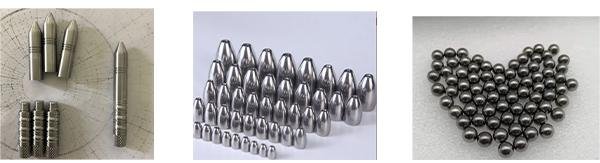
▲ Counterweight Products
High-Density Tungsten Base Alloy Counterweight Series: balance weights for machinery; flyweights; oil drilling counterweight rods; dart shafts; golf club counterweights; racing car counterweights; vibrators for mobile phones and gaming devices; gyroscopes for aviation and aerospace; pendulum for clocks; balance weight balls; anti-vibration boring bars.
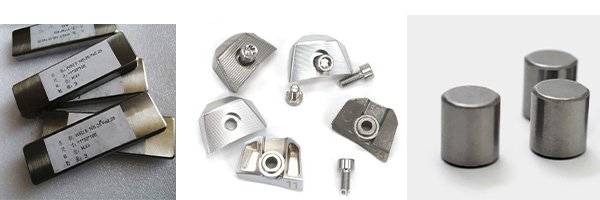
▲ Medical Instruments
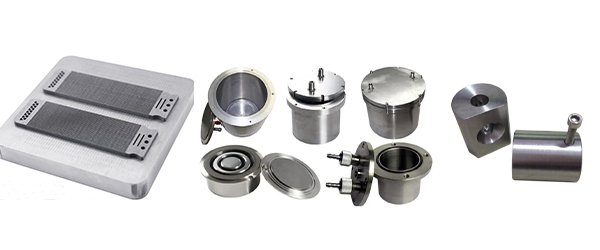
Medical Tungsten Alloy Radiation Shielding Material Series:
1. Tungsten alloy grid blades;
2. Tungsten alloy protection tanks - used for radiation shielding walls in medical applications; shielding syringes - used for shielding medical radioactive solutions; tungsten alloy storages - used for storing radioactive substances in tanks, boxes, and other containers.
3. Collimators - used in medical linear accelerators and collimators for tungsten alloy series detection container systems in nuclear technology applications; shielding for Co60 and other radiations.
▲ Electrical Materials
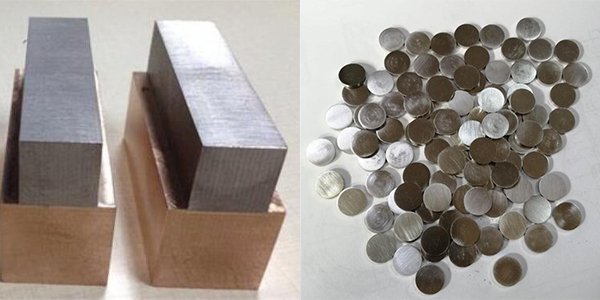
Electrodes for electrical discharge machining (EDM) and electrodes for resistance welding; high-density electrical contacts, contacts in air circuit breakers.
▲ Military Products
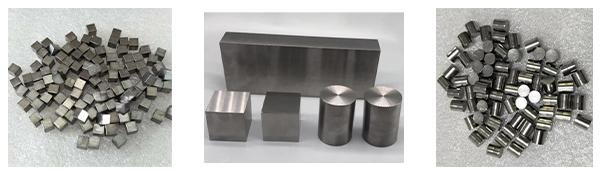
Armor-piercing shells; shrapnel, balls, rods, square grains, cylinders, other tungsten alloy electro-erosion blocks, tungsten alloy for nuclear technology applications.
▲The Die-casting Industry
Tungsten-molybdenum-nickel-iron alloy is applied in the die-casting industry. To address issues such as insufficient thermal conductivity, high wear resistance, and aluminum adhesion in die-casting molds, the best solution is tungsten alloy materials that contain tungsten and molybdenum. Nowadays, these high-tech metal tungsten alloys are commonly used in the die-casting industry.