
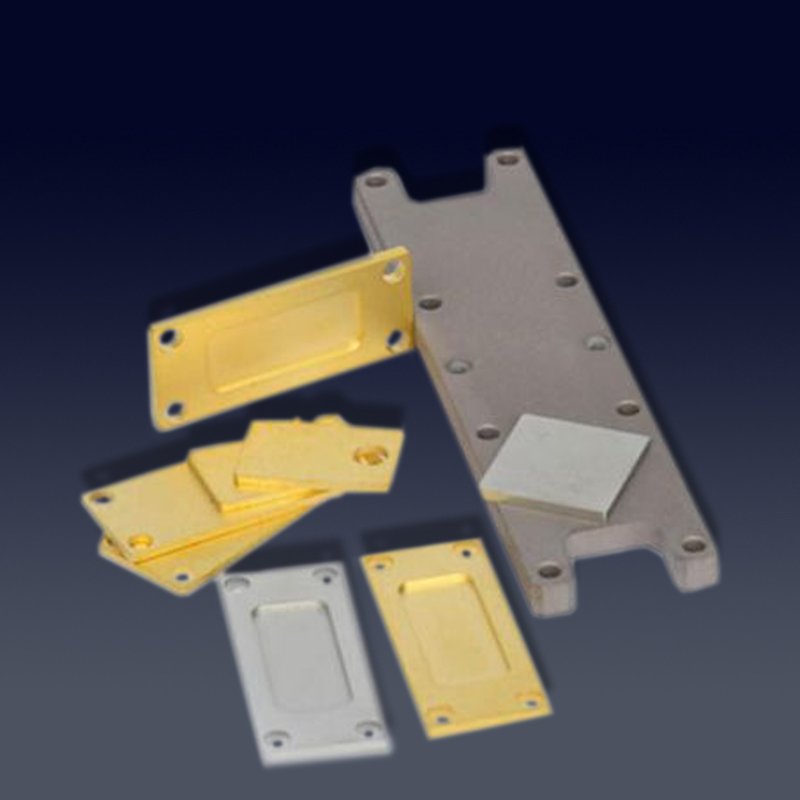
Copper/Molybdenum-Copper/Copper is a composite material with a "sandwich" structure consisting of a central core of molybdenum copper (MoCu) clad on both sides with pure copper. This material is abbreviated as CPC (Cu/MoCu (Pressed)/Cu). While the thermal expansion coefficient of CPC is slightly higher than that of CMC, CPC offers superior strength between copper and MoCu, higher thermal conductivity, improved reliability, and better heat dissipation. Common layer thickness ratios of CPC are 1:4:1, 2:3:2, and 1:1:1, but these can be adjusted as needed to achieve optimal performance.
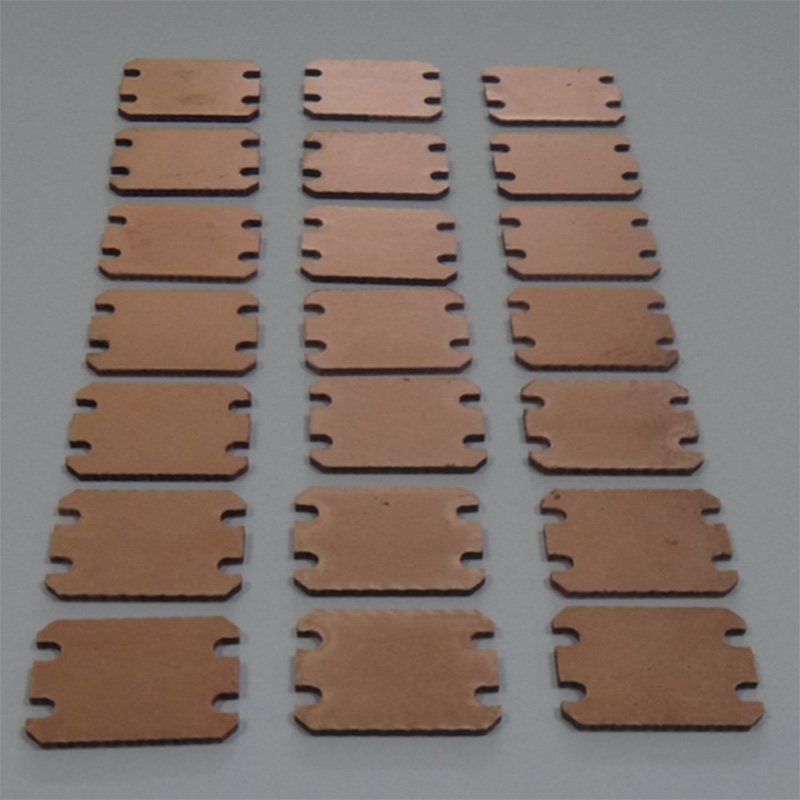
Higher Thermal Conductivity: Compared to copper/molybdenum/copper materials.
Cost Reduction: Can be stamped into parts, reducing manufacturing costs.
Durability: Strong interface bonding capable of withstanding repeated high-temperature impacts at 850°C.
Customizable Thermal Expansion Coefficient: Designed to match materials such as semiconductors and ceramics.
Non-Magnetic: Suitable for applications requiring non-magnetic materials.
| Material | Grade | Composition | CTE (Thermal Expansion Coefficient) [ppm/K] | Thermal Conductivity (TC) [W/(m·K)] | Density [g/cm³] |
|---|---|---|---|---|---|
| CPC | CPC111 | Cu/Mo70-Cu/Cu | 9.0 ± 0.5 | >280 | 9.1 ± 0.2 |
| CPC | CPC232 | Cu/Mo70-Cu/Cu | 8.8 ± 0.5 | >260 | 9.27 ± 0.2 |
| CPC | CPC141 | Cu/Mo70-Cu/Cu | 8.2 ± 0.5 | >200 | 9.5 ± 0.3 |
Note: CPC111 represents a Cu/Mo70-Cu/Cu structure with a thickness ratio of 1:1:1.
Applications:
With customizable thermal expansion coefficients and thermal conductivity, Copper/Molybdenum-Copper/Copper (CPC) is used as substrates and flanges for RF, microwave, and high-power semiconductor devices.